
A Reformation Movement that Continues in Every Language
In 1517, a question pressed on the Church: would God’s Word be heard clearly, trusted fully, and placed at the center of Christian life? The Reformation that followed did not invent the Bible or the desire to translate it. It renewed an old conviction with fresh urgency: God speaks through Scripture, and people need to hear that Word in language they understand.
Today, the same concern motivates Bible translation partnerships around the world. The people, tools, and geography have changed. The purpose has not: that all people may hear the good news of Jesus Christ in words that reach the heart.
The Word for the People
The Reformation is often remembered through a dramatic date: October 31, 1517, when Martin Luther is traditionally said to have posted his Ninety-five Theses in Wittenberg. Those theses began as a call for theological debate, especially over the sale of indulgences. At the heart of Luther’s reforming work, however, was a deeper pastoral concern. What does God say to people burdened by sin and searching for grace? Where can they hear the promise of forgiveness for Christ’s sake?
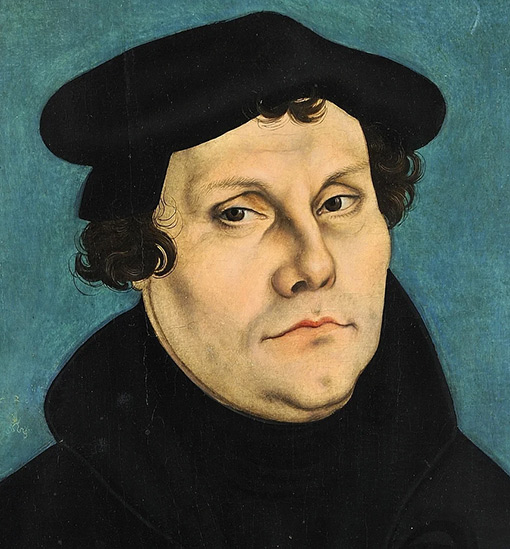
Martin Luther By Lucas Cranach the Elder – GalleriX, Public Domain
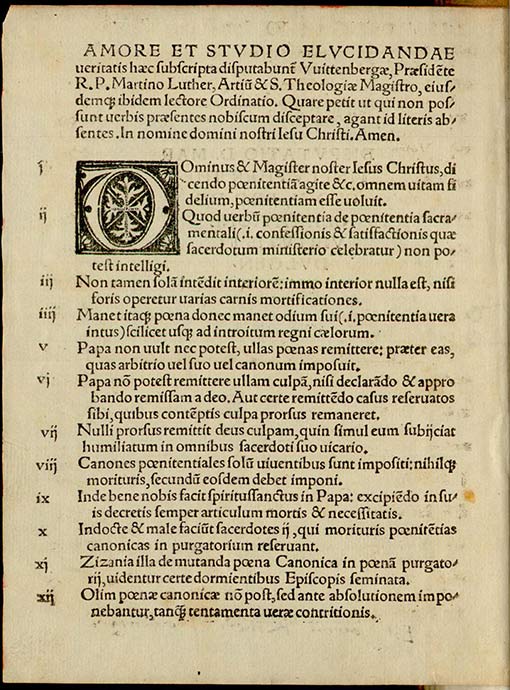
First page of the 1517 Basel printing of the Theses as a pamphlet, public domain
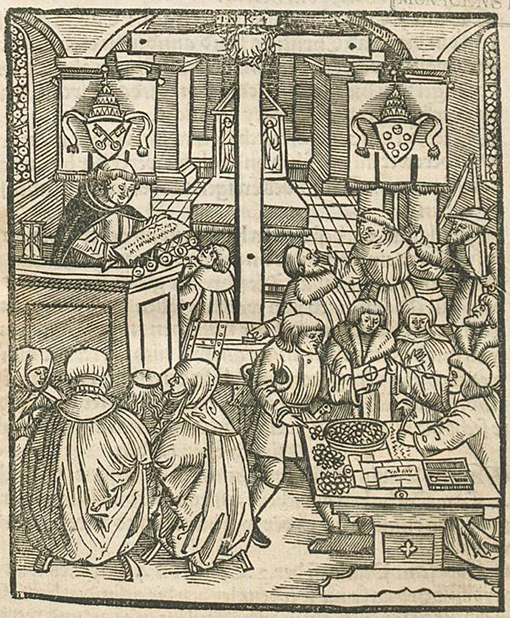
Indulgences: Indulgence selling woodcut by unknown artist, public domain
Luther’s answer was not a new religious system. It was a return to the living Word of God. Scripture, he insisted, must be heard and read, not held at a distance as the possession of a few educated people. The Gospel is God’s gift, and the Bible bears witness to that gift. If people are to live by this promise, they need access to the words that proclaim it.
Translation was therefore central to the Reformation’s life, not an accessory to it. Luther translated the New Testament into German while at Wartburg Castle, publishing it in 1522. Working with other scholars, he completed a full German Bible in 1534. German Scripture existed before Luther, but his translation helped bring biblical texts into the language of ordinary conversation and made them widely available through print. He listened to how people spoke, drawing on the words of families, workers, and children so that the text could be understood beyond the university and pulpit, a process very similar to how translation is done today.
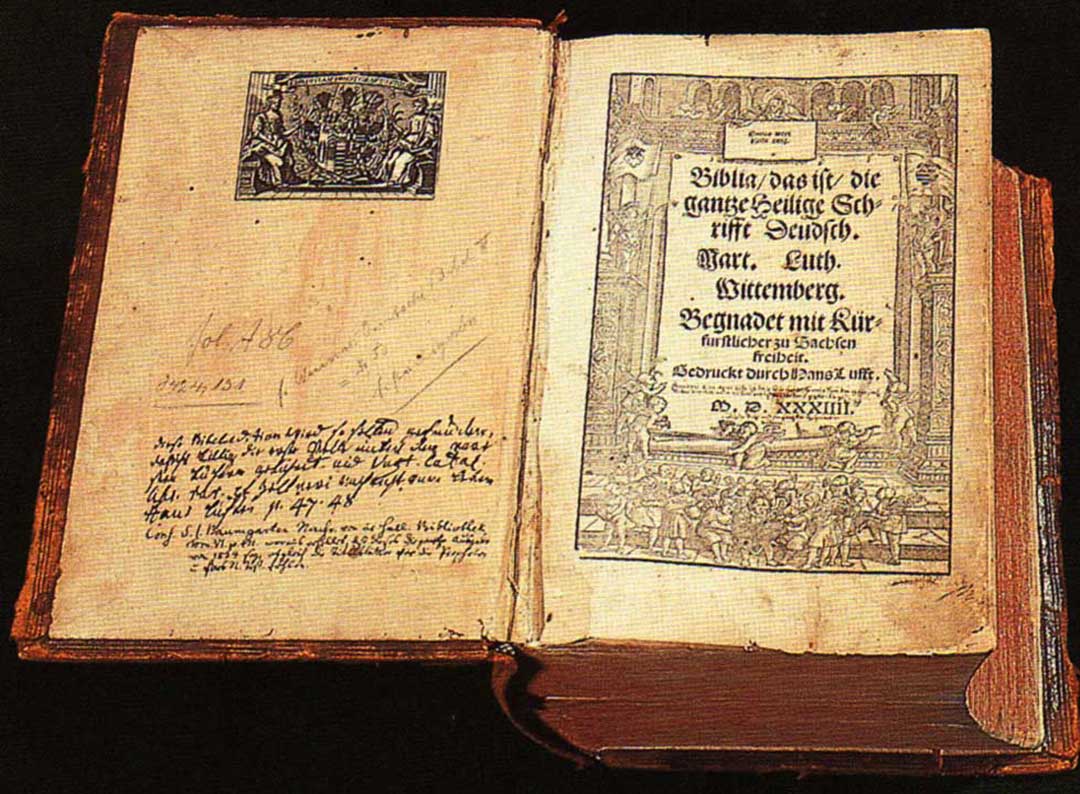
Martin Luther’s 1534 German Bible, public domain
Luther’s example does not mean that one translation or one language can serve every person. It points in the opposite direction: God’s Word is not confined to the language of scholars or the dominant culture. A Bible in a person’s own language can be read, spoken, sung, memorized, discussed, and passed on. Translation makes Scripture present in the rhythms of a community’s life.
The Church is sent to bear witness to Christ among all peoples. Bible translation serves that mission by helping people encounter Scripture in a language they understand best. It belongs to the whole Church, and it requires the gifts and leadership of Christians across traditions and communities.
Mission Takes Organized Shape
As Lutheran congregations grew in North America, they organized for shared work. In 1847, twelve pastors representing Lutheran congregations met in Chicago and formed what became The Lutheran Church—Missouri Synod (LCMS). Their new synodical structure helped congregations work together in areas such as education, ministry, and mission. The timeline of Lutheran mission is not a straight line from one institution to another, but this kind of cooperation created a durable framework for shared responsibility.
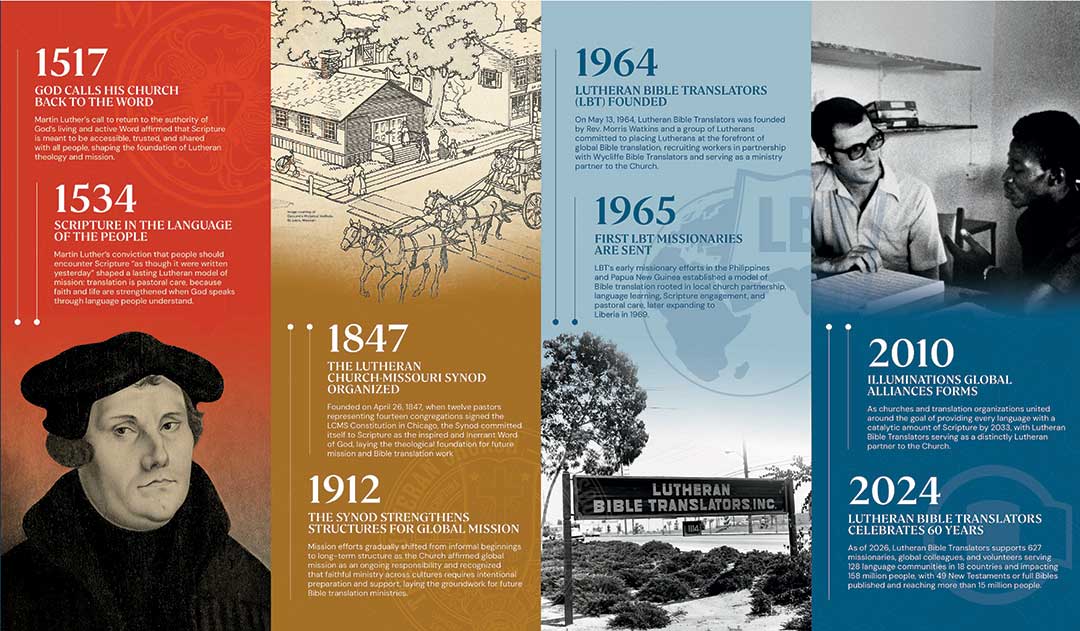
Timeline of Lutherans in Translation
By the early 20th century, Lutheran mission efforts were reaching across national borders. In 1912, the Synod strengthened structures for global mission, making international work a more explicit and organized responsibility. That shift mattered for Bible translation. Translation requires a long horizon: learning a language, building trust, developing literacy and Scripture engagement, training local translators, and supporting a community as it shapes and checks a text. Sustained partnerships and organized support can help local work continue through many stages and generations.
In the decades that followed, Lutheran leaders increasingly recognized that Bible translation called for specialized expertise and close cooperation with local churches and global partners. On May 13, 1964, Lutheran Bible Translators (LBT) was founded by the Rev. Morris Watkins and a group of Lutherans committed to placing Lutherans at the forefront of global Bible translation. From the beginning, the organization served as a ministry partner to the Church and collaborated with Wycliffe Bible Translators.
The first Lutheran Bible Translators missionaries were sent in 1965 to the Philippines and Papua New Guinea. Their work established a pattern that still guides Bible translation: partnership with local churches, careful language learning, Scripture engagement, and pastoral care. Translation is not a product delivered from outside. It is a relationship and a process in which local believers and language communities bring essential knowledge, leadership, and discernment.

Missionaries working with the Yessan Mayo in Papua New Guinea, 1970
That pattern expanded to Liberia in 1968. Over time, the work continued to change as communities and circumstances changed. In difficult seasons, local ownership was not a fallback; it was a recognition that people who speak a language are central to shaping Scripture in that language. Around the world, translation teams increasingly include local translators, church leaders, literacy workers, consultants, and community members. International partners contribute training, resources, and technical support, while local churches and communities guide the work and make it their own.
A Movement of Partners
The scale of the need makes cooperation essential. Thousands of language communities still have little or no Scripture in the language they understand best. Each community has its own history, oral and written traditions, church life, and hopes for the future. No single organization can serve them all. The work advances when churches, translation organizations, mission agencies, funders, educators, and local leaders align their gifts around a shared purpose.
In 2010, Bible translation organizations and churches came together in the global alliance now known as illumiNations, bringing greater coordination to a shared vision: access to Scripture for every language by 2033. Lutheran Bible Translators participates as a distinctly Lutheran partner within this wider movement. Its identity shapes its theology and service, while its mission is carried out through relationships that cross denominational lines. This is not an effort to expand a Lutheran institution. It is a way for Lutherans to serve the Church’s shared calling.
The 2033 goal is a milestone, not a finish line. The aim is for every language to have access to at least some Scripture by that year, often described as a catalytic portion. That first access can open the door to worship, teaching, and personal encounter with God’s Word. It does not mean that every language will have a complete Bible, or that translation and revision will end. The wider vision remains that the Church will continue translating and improving Scripture in response to the needs of each language community.
This distinction matters. Translation is not complete simply because a text has been published. Communities need ways to read, hear, and use Scripture. Some languages are primarily spoken, so oral Scripture and audio resources may be vital. Sign languages need translation shaped for visual communication. Literacy programs can help people engage with written Scripture. Churches need resources and training to teach and discuss what has been translated. A portion of Scripture can be a beginning, and local believers help determine what will serve their community next.
Technology can accelerate parts of this work. Digital tools help translators search, compare, draft, and share texts. Audio and mobile formats can carry Scripture beyond the printed page. But technology does not replace human judgment, linguistic expertise, theological care, or the trust built through long-term relationships. A translation must communicate faithfully and naturally, and that requires people who know both the language and the community.
A 1517 Moment for This Generation
Luther’s Reformation was not a single act of translation, and today’s movement is not a single campaign. Both are sustained by a conviction: God’s Word is meant to be heard.
In Luther’s day, the challenge was to put Scripture into the language of neighbors and make it available through the new power of print.
In ours, it is to listen to thousands of communities, support local translation leaders, and work across borders so that language does not keep people from the Scriptures.
The timeline from 1517 to 2033 is not a claim that history repeats itself. It is an invitation to see how a reforming impulse continues. The same question remains: How can people hear God’s Word clearly and confidently?
A response now may look like a translator working with a mother-tongue team, a pastor helping a congregation engage a new translation, a church praying for a language community, a donor sustaining long-term work, or a partner sharing expertise and tools.
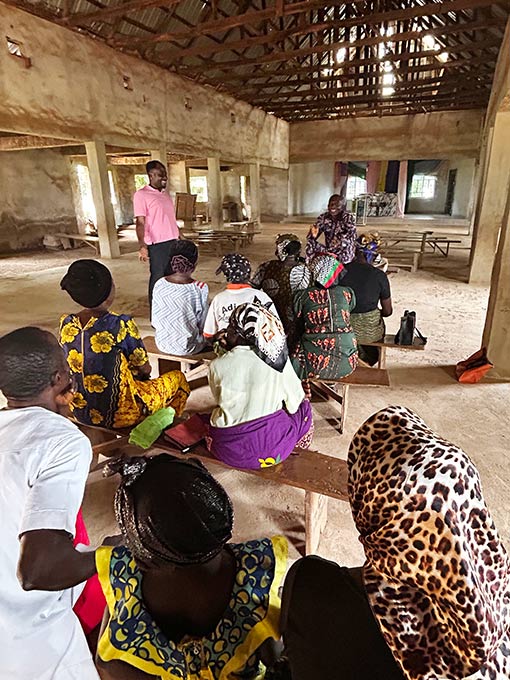
2026: Rev. Dr. Linus Otronyi visiting a Yala Bible reading group in Ogoja, Nigeria
Every language is more than a code to be deciphered. It carries memory, humor, grief, wisdom, and ways of making sense of the world. When Scripture is translated with care and shaped in partnership, the Gospel is not made foreign to a community. People can hear the story of Jesus in the words of home and respond within their own community of faith.
Lutherans have a particular story to tell because the Reformation placed Scripture and proclamation at the center of the Church’s life. That story does not make Lutherans owners of the work. It gives them a responsibility to contribute faithfully, to learn from local Christians, and to join other partners in serving the whole Church. The fruit of translation belongs to the people who receive, interpret, teach, and live the Word together.
In 1517, the Church was called back to the Word. In 2033, the global Church is working so that every language can have access to Scripture. Between those dates lie centuries of translation, mission, partnership, prayer, and patient labor. The next chapter is being written by local communities and their partners. A 1517 moment for this generation means continuing the Reformation’s central concern: not that the Church speak louder about itself, but that the Word of God be heard, trusted, and shared among all peoples.
For more information,
contact us or visit our website