The Beginning
There was a day when people felt a call of the Holy Spirit to become a missionary, to leave home, attend college and prepare for serving in some far away country where people had not heard the message of the Gospel of Jesus Christ. It was such a powerful calling that nothing could stop them from answering and preparing for this life calling. They knew of the dangers, sickness, possibilities of death and resistance of people to the missionaries’ message of the Gospel. Yet they went.
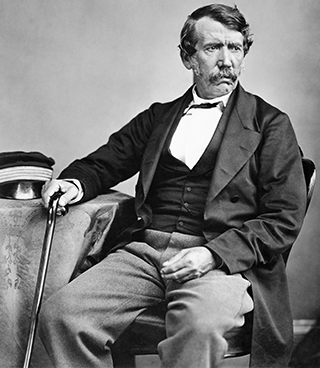
David Livingstone, 1864 [public domain]
Early pioneers of going to a mission field included such names as Dr. David Livingstone to Africa or J. Hudson Taylor to China, and in the Lutheran Church, such names as: 1) Pastor John and Oline Hogstad (1887-1911); 2) Pastor Erik Hansen and Elisabeth Tou (1889-1903); 3) Pastor Jacob Bernsten and Hannah Loney Jerstad (1898-1911); and 4) Dr. John and Sarah Dyrnes (1900-1943).
They all faced all the dangers of being early missionaries in a foreign land, culture and language, but with a faith to move mountains!
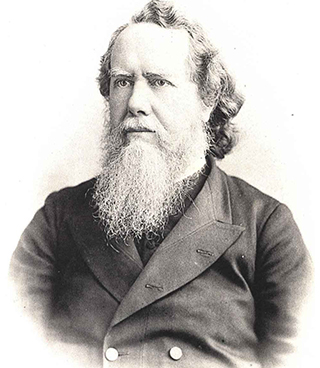
J. Hudson Taylor, 1893 [public domain]
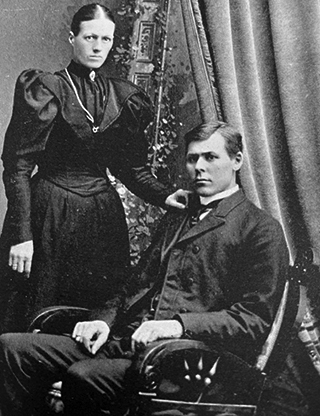
John and Oline Hogstad
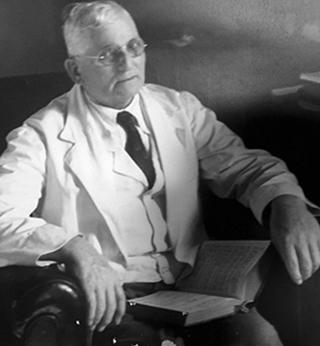
Dr. John Dyrnes
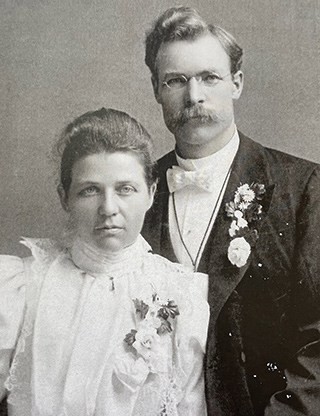
Jakob and Hanna Jerstad

Early Malagasy Christians
One account of these four pioneer missionaries mentions Pastor Erik Tou. He was born in Norway but attended Augsburg Seminary in Minneapolis. He and his wife arrived in Madagascar during a time of tribal and colonial warfare. Their calling was characterized by extreme personal loss. When Pastor Tou returned to the USA in 1903, he left behind four family graves—his wife and three children—yet remained committed to the “bad days as well as the good”.

Pastor Erik Tou
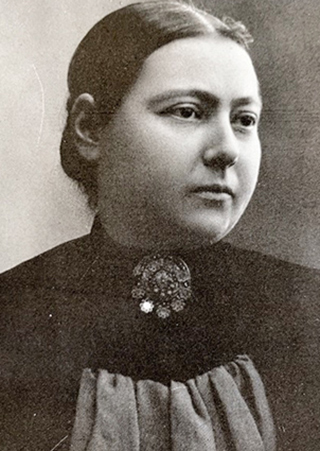
Elisabeth Tou
These committed Christians gave their all, even their own lives, to begin a mission work that today is the Malagasy Lutheran Church (FLM). These missionaries and hundreds that followed shared the Gospel and all realized that at some point in time they had to turn the mission over to the Malagasy people. They helped prepare for that day by creating Bible schools to train evangelists and seminaries to train pastors. In 1950, the day came when the Malagasy Lutheran Church was formed, missionaries remained in a decreasing number until 2026, when the last missionaries from the USA left Madagascar.
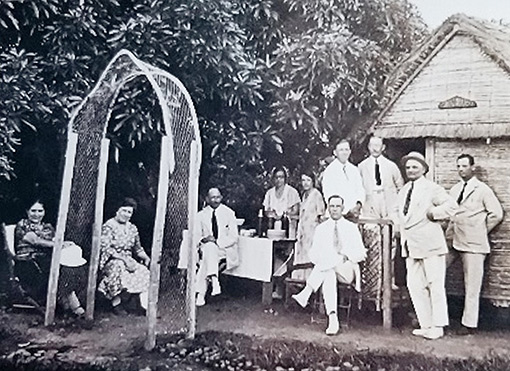
Early group of missionaries
A New Day
There was a slow but steady decrease in USA missionaries serving in Madagascar. It could be viewed as a sad process, but from the very beginning of the missionary period in Madagascar the missionaries realized that their role was to train the early Christians to become the pastors and leaders of the church. The missionaries were instrumental in helping Malagasy Christians to gradually assume complete leadership of their church.
Today the Malagasy Lutheran Church has six regional seminaries to prepare pastors to be ordained and to serve in congregations across Madagascar. In addition, they have one seminary SALT (Sekoly Ambony Loterana momba ny TeolojiaI, which translated means Lutheran Graduate School of Theology), where pastors may attend to receive a Masters of Theology Degree.
In addition to these seminaries, there are approximately 24 Bible schools—roughly one for each synod—that offer two-year programs to train laypersons as evangelists. The evangelists typically are assigned to live in a village where there are a few or no Christians. It may be a difficult situation and in some cases the evangelists may need to be removed because of physical threats, but these evangelists are at the center of the rapid growth of the Malagasy Lutheran Church.
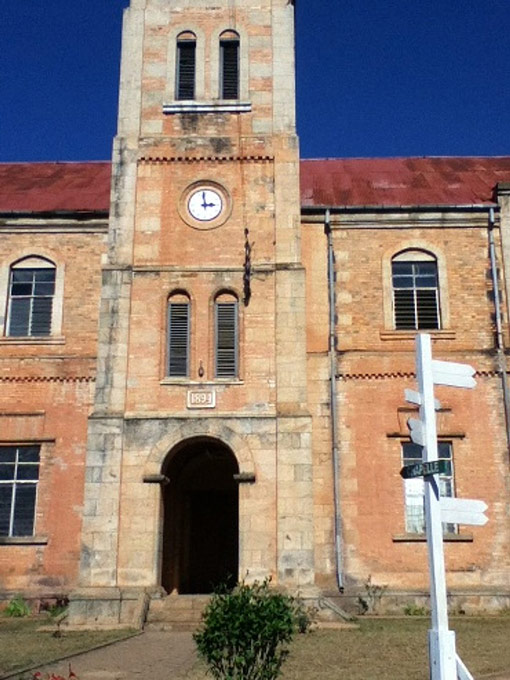
SALT Seminary
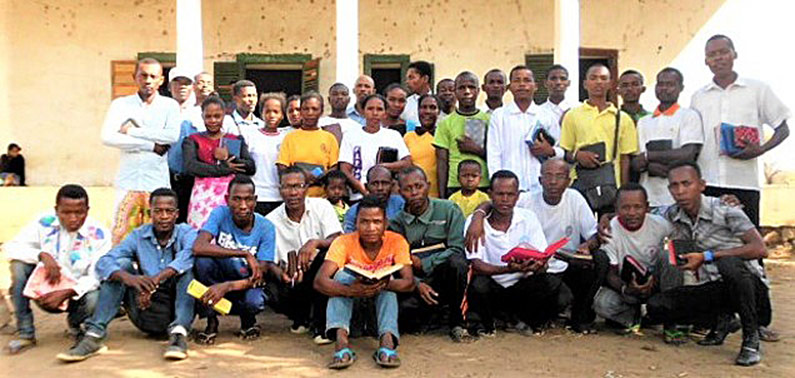
Students at Mananovy Bible School
An example of how the evangelists affect the rapid growth of the Malagasy Lutheran Church is the quarterly statistic for January through March of 2026 for four of the synods where Friends of Madagascar Mission (FOMM) support 72 evangelists:
Villages visited: 999
Families visited: 3,728
Baptism of children: 967
Baptism of adults: 496

An evangelist and his family
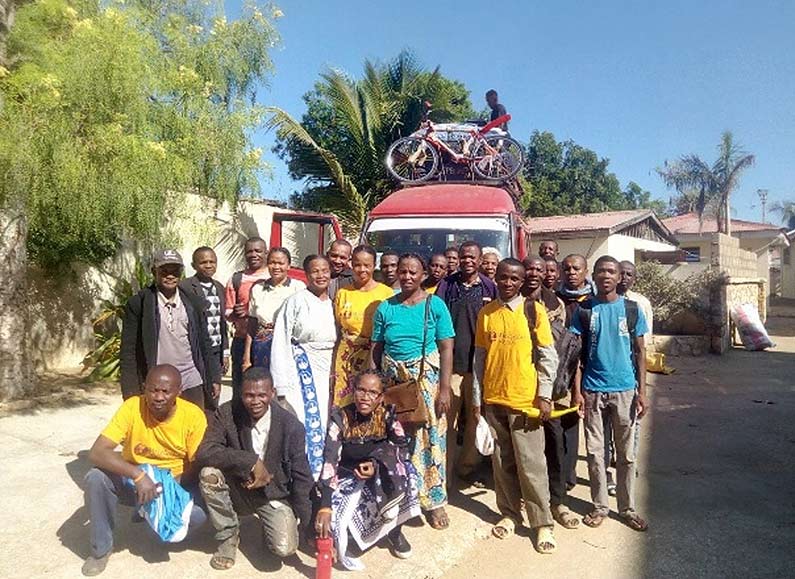
A group of evangelists
A Growing Church
The Malagasy Lutheran Church has a membership of approximately 5.3 million as of 2023. It is recognized as the third-largest church in Madagascar and one of the fastest-growing Lutheran denominations globally.
Key Membership Statistics
- Total Members: ~5,356,456 (2023 figures).
- Congregations: Over 7,000 to 8,500 active congregations.
- Clergy: Approximately 1,500 to 1,810 pastors.
- Growth Rate: The church has seen significant expansion, growing from roughly 180,000 members at its independence in 1950 to its current multi-million member status.
A Major Issue
The average income per capita in Madagascar is $545.00 per year—not week, not month—but year! This is ultimate poverty and Madagascar unfortunately almost always ranks in the top five poorest nations. In Madagascar approximately 75% of its population are living in extreme poverty, heavily impacting rural areas where 80% struggle to survive. The situation is driven by low-productivity subsistence agriculture, high vulnerability to cyclones, political instability, and corruption. Key effects include severe child malnutrition (39.8% stunting), low school attendance, and a lack of basic infrastructure (according to the World Bank).
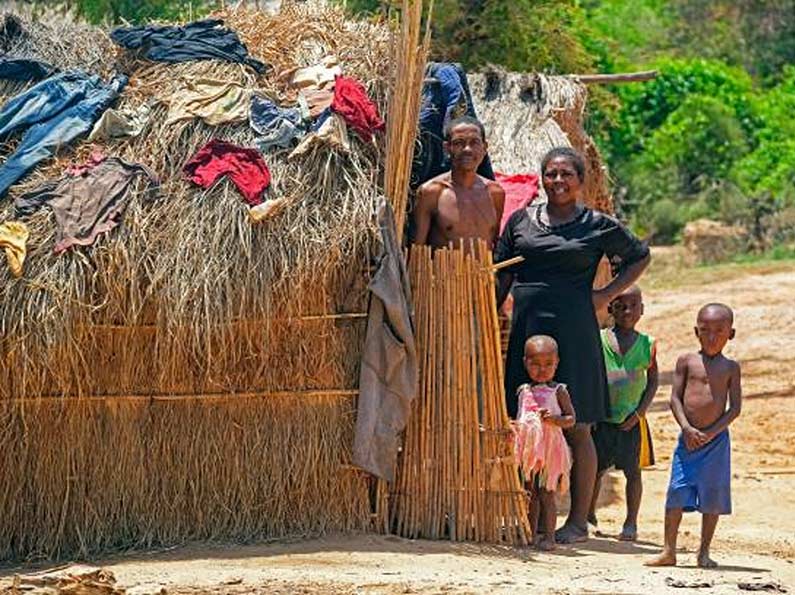
Poverty is abundant
This condition obviously affects the Malagasy Lutheran Church’s ability to carve out an effective witness to the Gospel through Word and deed. Here is where “Wisdom from the Field” comes into effect.
Today, mission work takes on a whole different relationship with the people of Madagascar. We Americans are not in charge! We need to establish a different approach to how we relate to Christians in a country who need to be in relationship to us. At Friends of Madagascar Mission, we have established what we call the “Four Pillars” of our relationship.
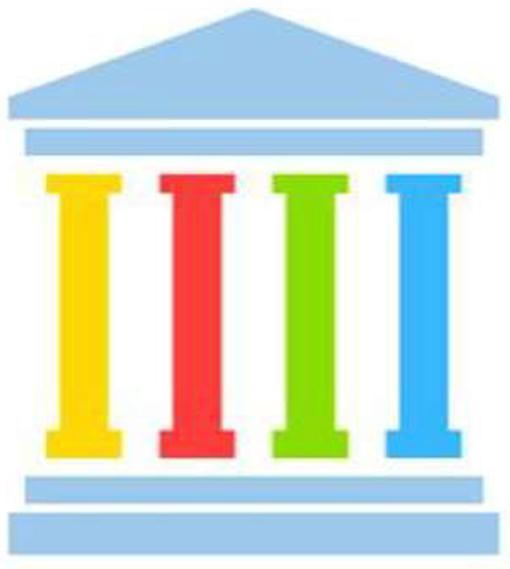
- Indigenization: It means the mission and ministry in Madagascar belong to the people of Madagascar. Friends of Madagascar Mission joins the Malagasy Lutheran church in supporting the mission with our prayers, financial support and consultations on their mission.
- Sustainability: This means that FOMM provides financial support to the programs in Madagascar so the programs may continue their mission. But the leaders of each mission program need to ask, “What may we do to raise more financial support for our programs?” The nation is poor, but the people are wonderful: loving, caring, smart, resourceful, etc. FOMM prays to encourage the people to use their best gifts to work to raising their funds to continue to build a great mission that is truly all theirs! Friends of Madagascar Mission will not abandon them but encourage a greater ownership.
- Accountability: Since the beginning of Friends of Madagascar, we have required the auditing of our funds because we have two promises to our donors: 100% of their gifts would go to the mission, and we would not take anything out of their gifts for our administrative costs. So, the accounting system, an audit (actually a triple audit process) is necessary to track the spending of the funds sent to Madagascar. Also, we teach accounting principles and methods to those who handle FOMM funds. In addition, they must sign and agree to FOMM’s “Financial Standards”.
- Benevolence: In the 4th chapter of Ephesians Paul begs the Christians to care and treat each other with dignity and respect. The Church is too often torn apart by not living as the redeemed people of God but rather acting out destructive behavior. We are about the mission of Christ, and we work with each other respectfully, even when we may have disagreements.
This is a new day for mission. It is an exciting day! Working through language and culture differences is often difficult, but the “Wisdom from the Field” is that we must keep the mission at the center of all that we do.
These “Four Pillars” make our involvement in the new day of global mission an exciting task!
For more information, visit the FOMM website.