
The Federwitz Family Prepares for Service in Papua New Guinea
Before every flight, Nathan Federwitz completes a preflight check. He carefully examines the aircraft, working through a detailed checklist to ensure that everything is functioning properly and the plane is ready to fly.
For the past several years, Nathan and his wife, Sarah, have been completing a much longer preflight checklist. Their list included education, aviation certification, missionary training, visas, immunizations, overseas shipping, support raising, and countless family preparations. Each completed step brought them closer to the place God had called them to serve: Papua New Guinea.
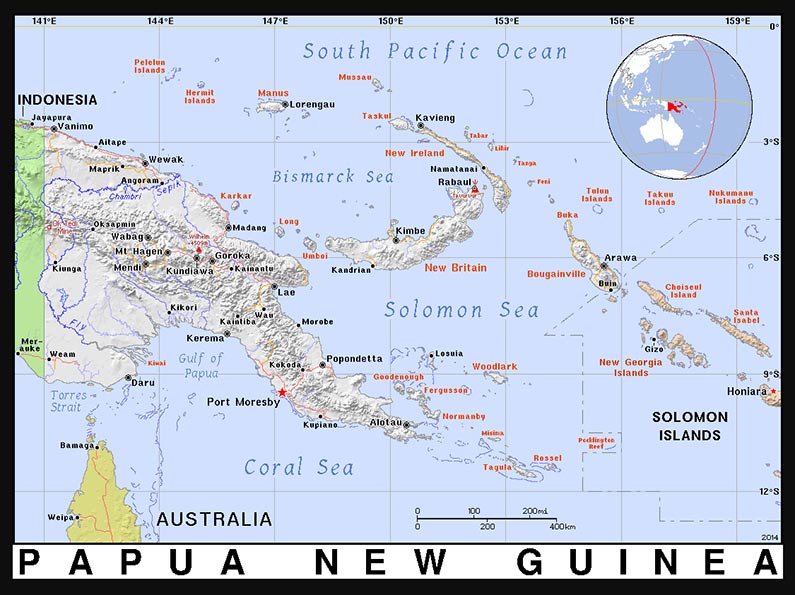
Map courtesy of ian.macky.net public domain maps
This April, after more than two and a half years of preparation, the Federwitz family was finally cleared for takeoff. “We are so excited to announce that we have finally arrived and begun serving in Papua New Guinea!” they shared in their June prayer letter.
For Nathan, arriving in Papua New Guinea was both a new beginning and a return home. Nathan was raised among the mountains and remote communities of Papua New Guinea, where his parents served as missionaries. His father, Jonathan, spent more than two decades as a missionary pilot in the country, giving Nathan an early view of the ways aviation can support the spread of the Gospel.
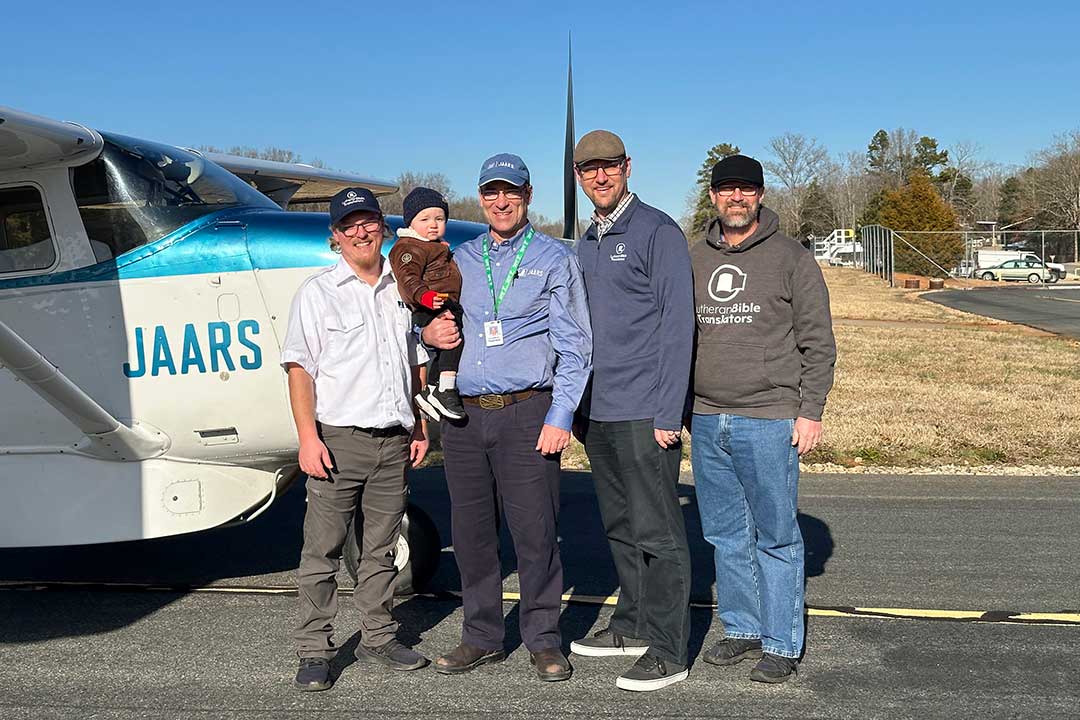
l-r: Nathan, one of Nathan’s sons, Jonathan Federwtiz (Nathan’s dad), Paul Federwitz, and David Federwitz. Nathan is a 3rd generation missionary with Lutheran Bible Translators. His grandparents, Dale and Alvina Federwitz, were longtime missionaries in West Africa.
Across Papua New Guinea’s rugged mountain ranges, dense forests, and winding rivers, limited roads leave many communities isolated. In this landscape, an airplane is not simply a convenient way to travel. It is a vital connection, carrying people, supplies, and essential resources to places that might otherwise remain out of reach.

Papua New Guinea’s rugged terrain makes mission aviation a vital connection for remote communities.
The Path Toward Missionary Service
From an early age, Nathan felt called to become a pilot and use aviation to support Bible translation in remote communities. He attended Concordia University Wisconsin, where he earned a bachelor’s degree in missions with a Director of Church Ministries certification. He then studied at the School of Missionary Aviation Technology (SMAT) in Ionia, Michigan, earning his aviation maintenance certification and commercial pilot’s license.
Sarah’s path toward missionary service was shaped by her own experience in a ministry family. As the daughter of a Lutheran Army chaplain, she grew up familiar with the rhythms of service, transition, and caring for people in varied circumstances. She earned a bachelor’s degree in theology from Concordia University Wisconsin and completed her deaconess studies at Concordia Theological Seminary (CTSFW) in Fort Wayne, Indiana, in 2023.
Together, Nathan and Sarah joined Lutheran Bible Translators (LBT) and began preparing to serve overseas. Nathan was assigned to work with JAARS, an organization that provides aviation and other forms of transportation support for Bible translation ministries. Finding the right location required careful coordination between both organizations. The placement needed to support the needs of Lutheran Bible Translators while also providing a setting where Nathan’s specialized aviation skills could be used effectively. After a long season of waiting and prayer, the assignment became clear. The family would serve in Papua New Guinea.
Nathan’s preparation included a four-month Pre-Field Orientation with extensive hands-on training. He studied the PT6 engine used in the Kodiak aircraft he will fly in Papua New Guinea and gained experience in aircraft maintenance and safety management.
One important milestone was his first solo flight in a Helio Courier. Nathan completed 22 hours of training before demonstrating that he could safely fly the aircraft alone. His solo flight included taking off and landing on a 1,200-foot, uphill grass runway, the kind of challenging environment designed to prepare pilots for overseas service.
As Nathan completed his training, the family worked through a lengthy list of practical preparations. They secured visas, attended appointments, arranged travel, and packed clothing in several sizes for their two growing sons. They also shipped kitchen supplies and meaningful family belongings, including their Christmas tree and ornaments, that would be difficult to replace at their new home.
The Journey to a New Home
On May 12, 2026, Nathan, Sarah, and their two toddler sons left their apartment in North Carolina and began the journey across the Pacific. They traveled with 12 pieces of luggage, two car seats, a crib, and a stroller. Following a 14-hour flight and a stop in Australia, they arrived at their new home in Ukarumpa, Papua New Guinea, on May 15.
Their first weeks brought both joys and challenges. The young family navigated jet lag, sickness, new routines, and the unexpected complexity of completing simple tasks in a different country. At the same time, they began enjoying the beauty of Papua New Guinea, the people around them, and the blessing of living near Nathan’s sister Leah and her husband, Freddie. Nathan soon reported for his first day of work with aviation. His next steps include learning Papua New Guinea’s flight regulations and completing the requirements necessary to begin flying there.
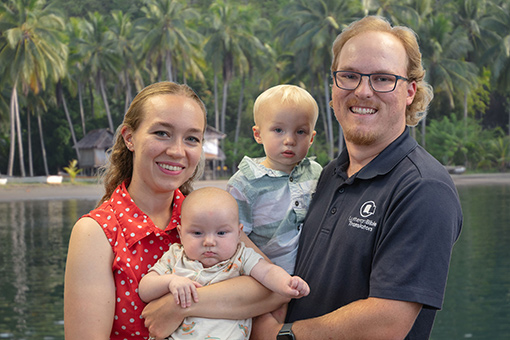
Sarah and Nathan Federwitz with their two sons
The fellowship serves Oromo-speaking refugees and residents living in Nairobi. Many arrive in the city seeking safety, opportunity, and a new beginning. Some carry deep pain from displacement and hardship. The church exists to walk alongside them—offering worship, belonging, healing, and spiritual growth.
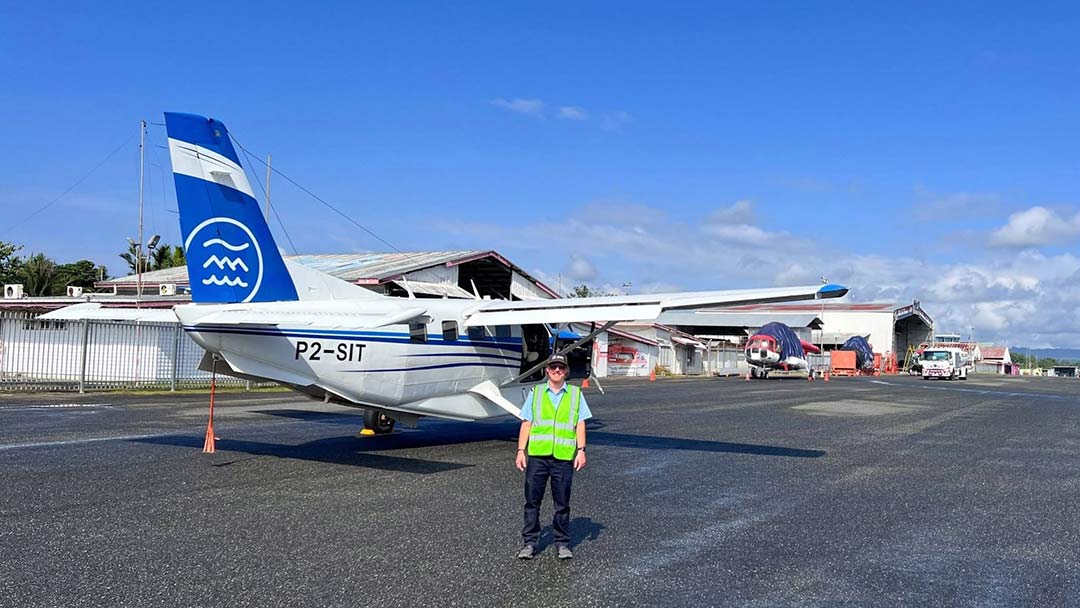
Nathan Federwitz stands beside a mission aircraft in Papua New Guinea, where he serves as a pilot supporting Bible translation ministry.
Orientation, Language Learning, and Cultural Instruction
The entire family will also participate in a Papua New Guinea orientation course that includes language learning and cultural instruction. As part of that training, they expect to spend two weeks living in a Papua New Guinean village. The experience will help them establish a stronger foundation for serving alongside the people who now surround them.
That emphasis on learning and relationship is essential. Bible translation is not simply a technical exercise completed by outside experts. It is deeply relational work led by local churches, translators, and language communities. Missionaries serve alongside those leaders, contributing their training while learning from the people and context in which they have been invited to work.
Papua New Guinea is one of the most linguistically diverse countries in the world, with more than 800 languages. Many communities still do not have access to the whole Bible in the language they understand best. Local translation teams are working to change that, often while facing significant barriers to training, technology, transportation, and collaboration. Aviation helps remove some of those barriers. A flight may bring translators together for a workshop, deliver laptops and solar equipment, carry a consultant to a remote community, or transport completed Scripture materials. The pilot may not draft or check the translated verses, but each safe flight supports the people who do.
A New Season
Nathan and Sarah’s arrival marks the completion of one long checklist, but it also begins a new season of learning and service. Together, they are stepping into a shared vocation of service. With faith, preparation, and the prayers of those who have walked alongside them, their new mission is ready to take flight.
To learn more about Nathan and other Lutheran Bible Translators’ missionaries who are working in the field, visit lbt.org/missionaries.